Pillows & Travel Comfort
Sleep and Beyond on the Go: Choosing Wool Support for Travel
A travel pillow is a small piece of gear asked to do an unusually large job: make a seat, unfamiliar bed, or long journey feel a little more restful. Wool can offer a soft, resilient surface, but material is only part of the decision. Size, shape, portability, and care instructions matter just as much.
Travel changes the conditions of sleep before it changes the time zone. A familiar bedroom gives way to a train seat, an airplane cabin, a guest room, or a hotel pillow that may be too tall, too flat, or simply unfamiliar. A compact pillow cannot turn every location into home, but it can add a more predictable layer of comfort—and help travelers make a deliberate choice about what supports their head and neck.
Sleep and Beyond’s wool pillow offerings invite a useful question for people planning a trip: could wool make sense as travel support? The answer depends on the particular pillow and how it will be used. A bed pillow is not automatically a travel pillow, and a natural fill is not automatically easy to pack or clean. Before choosing one, consider how it feels, how it fits into luggage, where it can be used, and what maintenance it requires.
For travelers drawn to wool, the appeal is practical as well as tactile. Wool fill can provide a soft, yielding cushion, while a separate washable case may make everyday refreshment easier. Yet care details are decisive. Some wool-filled pillows are spot-clean only, which asks for a little more preparation than a machine-washable option. The right choice is less about finding a universally perfect fill than matching the pillow’s qualities to the realities of the journey.
What a travel pillow needs to do
At home, a pillow usually stays in one place. On the road, it may be carried through airports, folded into a bag, used in a vehicle, or pressed against a hotel headboard. That shift changes the checklist. A good travel pillow should be comfortable in the position where you plan to use it, manageable to carry, and simple enough to care for within your itinerary.
- Support: Does its shape and loft suit the way you rest—upright, reclined, or lying down?
- Packability: Can you carry it without sacrificing space needed for other essentials?
- Cleanliness: Can the cover be removed and washed, or does the pillow itself need special care?
- Versatility: Will it work in more than one setting, or is it designed for a specific position?
- Durability: Can its construction handle regular packing and use without becoming misshapen?
The word “travel pillow” covers a broad range of designs. A small rectangular cushion might be useful as a headrest in a hotel or during a road trip, while a contoured neck pillow is intended to sit around the neck during upright rest. A full-size pillow may be more comfortable in a guest room but less convenient to bring along. Begin with the situation you want to improve rather than with the material name on the label.
It also helps to be realistic about what a pillow can accomplish. A pillow may provide a more comfortable surface or make it easier to settle into a resting position, but it cannot guarantee sleep or correct every posture problem. Persistent pain, numbness, or sleep disruption deserves attention beyond a change of pillow.
Why consider wool?
Wool has a distinctive feel compared with loose synthetic fiber, feathers, or foam. In a pillow, it can offer a cushioned, supportive surface with a degree of resilience. Its feel is not identical across all products: fill amount, construction, casing, and pillow shape can substantially change how soft or firm a pillow seems. For that reason, “wool-filled” is a starting point for comparison, not a complete description of comfort.
Travelers who already like wool bedding may appreciate a familiar material away from home. The benefit may be as simple as knowing what the pillow feels like, rather than adjusting to a completely different filling at the end of a tiring day. People who are new to wool should pay attention to the product’s dimensions and care guidance, and, when possible, try a similar pillow before relying on it for an important trip.
Sleep and Beyond makes wool-filled pillows, including the MyWool Pillow described in the site’s bedding information. Its listed construction is 100% washable wool fill with a natural cotton percale cover, and it is described as machine washable. Those details may appeal to someone comparing wool options for home use. They should not, however, be assumed to describe a separate travel model or establish that a particular pillow is compact enough for a carry-on. Confirm the exact model’s size, weight, and care instructions before packing it.
That distinction is important because travel suitability is a matter of dimensions and use, not just brand or fiber. A pillow made for a bed may be an excellent companion on a long car journey if space is available, yet cumbersome for a commuter or air traveler carrying only a small bag. A compact pillow may be easier to transport but provide less coverage. The best balance depends on the journey.
Packability: measure the pillow against the trip
“Portable” can mean different things. A pillow might be light enough to carry but too bulky to fit inside a backpack. Another may fit into luggage but not compress safely. Since wool pillows vary, check the product’s actual dimensions and packed form rather than relying on assumptions about natural fiber. If the manufacturer does not provide packed measurements, ask before purchase or test the pillow inside the bag you expect to use.
Think through the whole route. A pillow carried from a car to a cabin has different demands from one taken through a crowded station and onto a full flight. Will you hold it, attach it to luggage, or place it inside a carry-on? Is it likely to be compressed under other items? Will it need a protective bag? The answers can reveal whether a bed-style pillow is genuinely convenient or whether a smaller, travel-specific shape would be more practical.
A separate case can protect the pillow from contact with luggage and surfaces. It can also make the pillow easier to refresh between uses if the case is washable. Check that the case fits the pillow without pulling tightly across the fill, and confirm that its washing instructions are compatible with the material. The case is not merely a decorative detail; it is part of the travel-care plan.
Shape deserves equal attention. A rectangular pillow can be shifted and positioned in several ways, while a contoured design may stay in place better for a specific use. A pillow intended for a bed may not support the neck in an upright seat. Before departing, try the pillow in the position you expect to use it. A short test at home can expose a mismatch that would be frustrating on a long journey.
Support is personal—and positional
The useful height of a pillow depends on where the body is resting. Lying on a mattress is different from reclining in a seat, and the angle of a car or airplane seat changes how the head meets the pillow. A pillow that feels comfortable in bed may push the head forward when used upright. Conversely, a compact neck support may feel too small when placed behind the head in a guest room.
For a travel pillow used in bed, consider whether the loft is compatible with the mattress and your usual sleeping position. Side sleepers often need enough height to fill the space between the head and mattress; back sleepers may prefer a lower profile; stomach sleepers commonly find that a lower, softer pillow is more comfortable. These are general starting points, not rules. Shoulder width, mattress firmness, and individual preference all affect the result.
For upright rest, the goal is different: a pillow should provide a comfortable contact point without forcing the neck into an awkward angle. A soft pillow that collapses completely may not offer the support you want, while an overly bulky one can be hard to position. Try adjustments—placing it behind the neck, against the side of the head, or between the body and seat—only if the shape is designed to be used that way and the position feels comfortable.
Do not interpret a product’s supportive feel as a medical claim. A travel pillow may make a journey more comfortable, but it does not treat neck conditions, sleep disorders, or other health concerns. People with ongoing symptoms should consult a qualified healthcare professional rather than relying on bedding changes alone.
Care matters more when you are away from home
Cleaning instructions can determine whether a pillow fits your travel habits. Some wool pillows are machine washable; others are spot-clean only. Even within the same material category, products differ. Read the care label for the exact pillow, including the casing and any removable cover. Do not assume that a washable cover means the inner pillow can also go in the washing machine.
A spot-clean-only pillow requires a prevention-first approach. Use a clean removable case, keep the pillow away from damp or dirty surfaces, and pack it in a protective bag when it is not in use. If a spill occurs, follow the manufacturer’s instructions rather than soaking the fill or applying a cleaner that may damage the fibers. Allow the pillow to dry fully before packing it away.
A washable case gives travelers a convenient layer to launder after the trip. Check whether it can be removed easily and whether it can dry in time for the next leg of travel. For a pillow that is machine washable, confirm the permitted water temperature, cycle, and drying method. A care instruction that works in a home laundry room may be harder to follow in a hotel, so planning ahead is part of choosing well.
Wool is an animal fiber, so a person with a wool sensitivity should consider that before buying. “Natural” does not mean suitable for everyone, and a washable case does not remove the fill from direct contact if the casing is the only barrier. Travelers with allergies or sensitivities should review the full materials list and consult a healthcare professional when necessary. No pillow should be described as a guaranteed solution for allergies based only on its filling.
Wool alongside other travel-pillow priorities
Comparing fills can clarify trade-offs. Wool may appeal to someone seeking a natural, cushioned feel and willing to follow its specific care instructions. Down-alternative fiber can offer a soft, familiar hand, but construction and washability vary. Foam shapes can hold a defined contour, although they may be less compressible or feel warmer to some users. Silk describes the cover material in some travel pillows, not necessarily the filling; a silk exterior can feel smooth while the inner cushion uses a different material entirely.
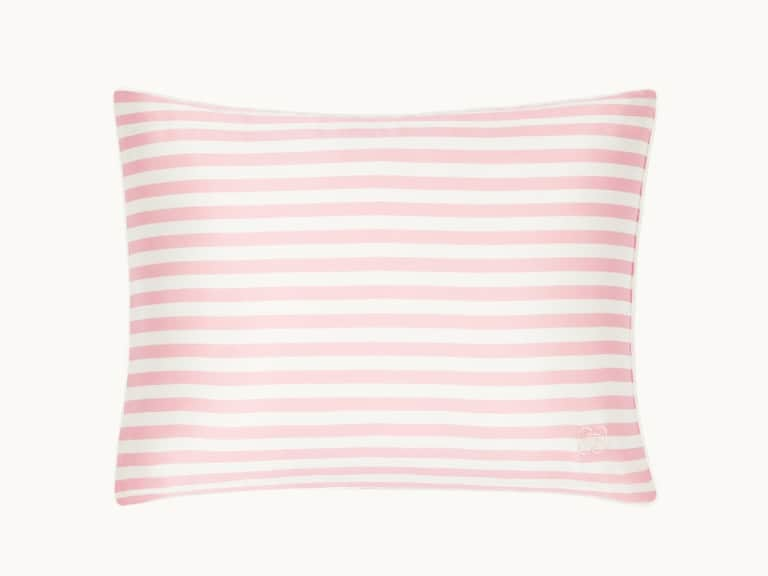
For example, the Gingerlily Silk Travel Pillow in Pink & Ivory Stripe is a travel-oriented option with a 19-momme mulberry silk exterior, a cotton sateen cushion casing, and a fill made from long-strand mulberry silk wrapped around a polyester core. It offers a useful comparison for readers weighing surface feel and portability against a wool-filled option. The product description includes a cushion pad and identifies its construction; it should not be treated as a wool substitute or as evidence that one fill is universally more supportive.
When comparing any two pillows, look beyond broad labels. Ask whether the stated dimensions match your use, whether the cover comes off, what the core contains, and how the complete pillow must be cleaned. If a manufacturer provides no information on weight or packed size, that uncertainty matters for travelers with limited luggage capacity. A material’s reputation cannot fill in missing product specifications.
Price, sustainability claims, and sourcing can also influence the decision, but they do not replace fit. Read certification language carefully and note what it applies to: a fill, a textile, or a manufacturing standard. Avoid treating a general claim as a guarantee about every aspect of a pillow’s environmental or health impact.
A simple pre-trip checklist
Before packing a wool pillow—or any travel pillow—run through a few practical questions:
- Where will it be used? A bed, seat, car, or lounge chair may call for different shapes.
- Does the size work? Check the pillow’s dimensions against your luggage and storage space.
- Have you tested the position? Try it at home rather than discovering a shape mismatch mid-journey.
- What is washable? Separate instructions for the pillow and removable case, if included.
- How will you protect it? Pack a clean case or bag, particularly for a spot-clean-only model.
- Are the materials appropriate for you? Review the full fill and casing, especially if you have sensitivities.
- Can it dry before packing? Moisture trapped in a pillow can make storage unpleasant and may affect the fill.
Small choices can make the difference between a useful travel companion and one more object to carry. If you are uncertain, start with a short trip or a familiar overnight stay. That gives you a chance to assess comfort, size, and upkeep before relying on the pillow during a longer itinerary.
The case for a considered choice
Sleep and Beyond’s wool pillows reflect an interest in natural-fiber bedding, but travel requires a more specific calculation. A pillow’s appeal at home does not settle whether its size, profile, and maintenance routine make sense on the road. Verify the exact model and distinguish bed pillows from products designed specifically for travel. In particular, do not infer travel dimensions or packability from the word “wool.”
For travelers who value a soft natural fill, can carry the pillow comfortably, and are prepared to follow its care instructions, wool may be worth considering. A removable washable case can simplify routine upkeep, while a protective bag can help keep the pillow clean between uses. For someone prioritizing minimal luggage, machine-washable construction, or a defined upright shape, a different design may be a better match.
There is no single best travel pillow for every body or itinerary. The sensible choice is the one that suits your resting position, fits the space you have, and can be maintained without turning travel into a laundry problem. With those details settled, a small pillow can offer something valuable: one familiar point of comfort in a journey built around changing places.